Why I’m Getting Arrested
There are a number of reasons, I suppose.
- Get out of the house.
- Do something useless that at least has a storyline.
- It’s what I know how to do.
- Trip through the mountains when I get out.
- It’s how I fight wars.
We’ve been in this ongoing energy war since Iraq 1. Iraq 2, we got the oil contracts. Afghanistan, forward bases. Libya, supply for NATO. Sometimes it’s a shooting war, sometimes just diplomatic hegemony. With oil supplies at their peak, prices are only going to go up, along with Chinese demand. Western companies have the Middle Eastern contracts locked up, extracting the profits. What little China can get from drilling off Cuba and its own coast isn’t all that much. There are Canadian tarsand oil. It’s nasty, but there’s a lot of carbon there.
How about a pipeline from Canada to Ft. Worth for shipping it around through Panama? What to do? It’s an environmental disaster, U.S. military and industry say they don’t want it because it’s too dirty what with our clean air regulations. China buys a big stake in the Alberta mining operation, holds $1.5 trillion in U.S. debt as leverage and gets our ally Canada to threaten with NAFTA and oil restrictions in times of shortage if we don’t allow the pipeline to be built down through Nevada. Nice move China. Beating America at its own game. But it’s going to be crunch time soon, isn’t it? Either we blink or we shoot. What to do?
Thankfully, I don’t have to decide. I just have to get arrested in a vain attempt to point out what a bad idea all of this is. So… here’s the PR.
Beginning on August 20th, a coalition of environmental groups will begin a two week period of staged arrests outside of the White House in an attempt to convince President Obama not to grant a permit to construct the Keystone XL Tar Sands Pipeline from Albert Canada, across the pristine reserves of the Western U.S., through the Oglala Aquifer, and down to the Gulf Coast of Texas.
I will be one of those arrested.
The environmental reasons to be opposed to this mammoth project are many. Most of the good, sound, scientific reasons are contained in a letter recently sent to the President by 20 leading scientists urging him not to grant the permit. Those scientists said “When other huge oilfields or coal mines were opened in the past, we knew much less about the damage that the carbon they contained would do to the earth’s climate system and to its oceans. Now that we do know, it’s imperative that we move quickly to alternate forms of energy — and that we leave the tarsands in the ground.”
Because this pipeline will cross national borders, it will be – at least in theory – the President’s sole decision as to whether to live up to his campaign promises and to do the right thing, or not.
- Tar Sands are the dirtiest, most environmentally destructive sources of carbon, far greater than conventional oil.
- Tar Sands oil extraction is the most costly to mine and refine.
- The Keystone XL (Xtra Large) pipeline will carry 900,000 barrels of toxic sludge across vital waterways and aquifers.
- The environmental impact of mining tar sands is as bad as mountaintop removal for coal, if not worse.
- The Alberta Tar Sands project has been rightly described as the world’s largest ‘carbon bomb’ which, if consumed, will doom any effort to limit global warming
- We need to lessen our dependence on fossil fuels, not increase it.
Yes, the environmental reasons to oppose Keystone Xtra Large are many. But there is another reason to oppose Keystone. It’s not strategically good for the U.S. economy or U.S. jobs. Why? China.
This project is being driven not just by the desire by oil companies for profits, it’s being driven by the Chinese government in its worldwide quest for energy dominance. In his recent trip to China, Canadian Foreign Minister Baird said Canada has “a strategic partner, whether it’s on energy, natural resources, international affairs”, referring to China. The Chinese government-sponsored PetroChina has already invested over $2 billion in the Alberta Tar Sands operation, giving it a 60% stake in the operation. They plan to produce up to 35,000 barrels a day by 2014, and eventually up to 500,000 a day (http://bit.ly/pnZQme) from Alberta and up to 900,000 barrels through the pipe at full capacity. The evidence is overwhelming, the plan straightforward. A surrogate spokesperson for the Canadian government, Peter Burn, even threatened that Canada would retaliate by withholding Canadian oil from the U.S. in times of shortage if the pipeline were not approved.
It is clear that U.S. territory is nothing more than a conduit for Chinese energy, from Alberta, down through sacred Western Lands, across the Ogallala Aquifer, to refineries and ships berthed in Texas. From there it will go through Panama to the Chinese mainland, where it will fuel Chinese industry and undercut our own. This may sound anti-Chinese; it is not. It is anti-industrial expansion using dirty oil. It wouldn’t matter whose industry it was.
This is a bad idea every way you look at it, and President Obama has the power to stop it. For the good of the environment, for the good of the people in its path, for the good of American industry and jobs and for the survival of the planet, the President should deny this permit.
Like it? Tip it! http://smalagodi.tip.me
Bad Casting or a Bad Movie?
 This continuing focus on the person of the President, regardless of who it is, misses the point badly. It is not the President that is the problem, it is the Presidency.
It is the fundamental institutional framework of the government and the two parties that should be the focus of our attention, not this endless characterization of whoever holds the office.
 Structurally what we have had (until now) is a functioning two party coalition government ~ let me repeat ~ a coalition government whose job it is, like every government, to protect the means of wealth production, populism be damned.
That is why we hear the unending cries for ‘bipartisanship’ and ‘compromise’, without which a coalition government cannot function. It is the defense of the status-quo. As long as that status-quo provides obscene wealth for a few and cheap gas and TV for the rest, it works.
But what is different now is the addition of a set of legislators who do not hold to that paradym. They hold to a fundamentalist religious view of impending apocalypse and their holy mission is to guide the world toward the fulfillment of that view.
 Let us put this into perspective: President Obama is doing what the President must do, protect the integrity of the union so that the businessmen, who are licensed to do business in the various States, can best go about their business. That’s what the job description is. The Presidency has nothing, nothing to do with the general welfare of the citizenry, except to stave off insurrections.
 You can cry all you want to about betrayals and such, but it’s like crying about the tooth fairy. The political machinery is structured, and has been since the founding, for the purpose of accumulating and concentrating capital in the hands of a few. The “popular” opposition to the status-quo is an ultra-right-wing fundamentalist religious orthodoxy.
These are the political operatives at work today. The socialists were purged from the Democratic Party and the Unions decades ago.
Refocus.
Like it? Tip it! http://smalagodi.tip.me
Hedges, Nader and the Revolution in Narnia
On the article “Ralph Nader is Tired of Running for President” by Chris Hedges: http://bit.ly/kNpnAl

Philip Berrigan
While I generally like the article, here is Hedges once again hedging.
He mentions the Catholic Priest Phillip Berrigan, but he does not mention that Berrigan was one of the Catonsville 9, who ‘appropriated’ draft records from the Catonsville draft board and publicly burned them with home-made napalm. For this he was sentenced to 3 1/2 years in prison.
Hedges laments “The death of liberal institutions (?) that once made incremental and piecemeal reform possible”, he decries the corruption of both parties, he paradoxically urges that “We must follow the path Nader forged, attempting to sway enough people with conscience to sever themselves permanently and unequivocally from the mainstream and especially the Democratic Party” while not acknowledging that it is the system that corrupted the parties, not the other way around. Any third party will be as susceptible to corruption as the others. He wisely does not call for an overthrow of the system.
Hedges calls for radical actions with a reformist strategy. He suggests “building a movement that offers an alternative ideology and vision to that of unfettered capitalism, consumerism, empire and globalization”, but what vanguard will build this movement and with what ideology and vision we do not know. A vision is not defined by what it is not. According to Hedges, ‘we’ must engage in this strategy in order to preempt the radical “killers on both sides of the divide who embrace[d] violence.”
If only there were some hope of success with this naïve strategy. But there is no ideology (thankfully) and there is no vision. The Catholic heroes of Mr. Hedges (and my) past are long gone and their religious Catholic pacifism long gone with them. There is a great deal of difference between the non-violent strategy of recent regime changes in the Arab Spring and that of a pacifist revolution such as led by Ghandi. Ghandi’s was a revolution aimed at overthrowing the colonial power. The Arab Spring was (is) an effort at regime change.
I like Mr. Hedges, but I think he needs to clear his head before urging others to risk theirs in pursuit of a goal that cannot be accomplished by the means he espouses.
Like it? Tip it! http://smalagodi.tip.me
It’s Called a Coalition

• The State exists to protect the means of production and the centers of wealth.
(nothing new there)
• The two Parties act together as a coalition to run the affairs of the State.
(now, that’s avant-garde)
• They compete for dominance within the coalition.
• The reward for ‘winning’ an election is increased cash flow through your channel of influence.
• The punishment for ‘losing’ an election is (simply) decreased cash flow through your channel of influence.
(No one is executed, sent to the gulag, or even impoverished. just less money. so civilized.)
Ramifications of this theory:
• No revolutionary change is possible through the electoral process (duh).
• Elections do matter as matters of domestic administrative detail. (i.e. Democrats are not likely to enact draconian laws on women’s reproductive health, etc.)
• No third parties will successfully develop, but the coalition members may change their shape, according to social taste (fashion).
• No single powerful leader will take authoritative power. An executive attempting to seize such power will not survive. (unless the power of the coalition is severely weakened so that it loses its grip on the electoral/state machinery. This is highly unlikely. No More Stalins, No More Hitlers)
 • No substantive changes in foreign policy will occur. The interests of the State remain the interests of the State.
• No substantive domestic changes will occur (i.e. universal health care) unless the coalition is forced through social action to implement some measure, usually just enough to diffuse the social action (see Obamacare).
• There is no measure of morality to be applied to the affairs of the State. It functions as a leviathan.
Like it? Tip it! http://smalagodi.tip.me
And I Can’t Wait to Leave Tomorrow
We Got Here Yestday
We’re Here Now
And I Can’t Wait
To Leave Tomorrow ~John Giorno
It has been a long time since I’ve posted, hasn’t it?
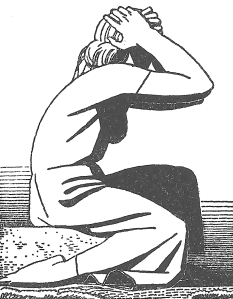
This proves that I am clearly not among the chattering class. I’ve often said that humans are a species of chatterers, and the development of man lies in learning how to shut up. This stems from my time among chimpanzees in Zimbabwe. They are nothing, if not chatterers.
Or it could also be a statement about my lack of discipline though I feel no need to consider myself a writer with a writer’s demands. Indeed I dislike writing and the product of writing, so I don’t regard this as a failing. I am not employed to produce words, so that helps too. My lack of discipline in anything, however, I regard as a failing.
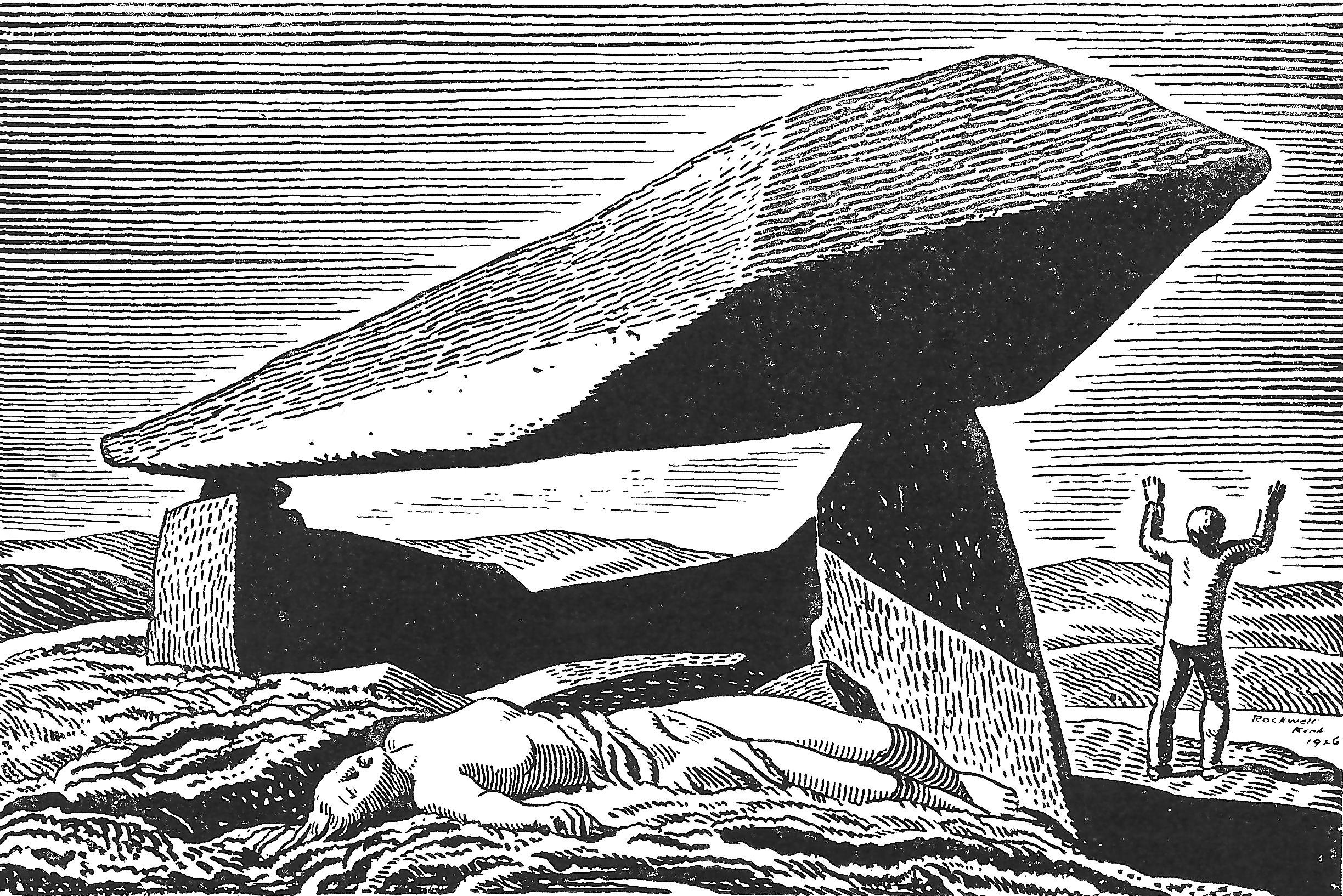 Or it could be the depression. The sheer weight of dumb consciousness making it impossible to move. It is like Kitaro’s distinction between inert matter and biology; the former is acted upon and behaves according to its structure, the latter, life, moves from the formed to the forming in a constant process of becoming again, but not quite the same. The motivation of life is the desire to be something else. There simply has been no motivation in me.
The most I have been able to muster are some weak gestures with the robot fingers of the social media; a digital pointer at Spain and then Greece. Look at the Indignatos who are alive enough to be indignant. Or look! Cows in China that produce human milk! We must learn another way to value one another, or else! Our money and our mother’s tits are worthless.
I tire of making the same disjointed arguments over and over. I tell myself I’m going to organize the damn things, and write them down, and put them up as bullet points of facts in a framework, just to be done with them. But I know as soon as I do they will want to be sustained and defended. They will need to be fed with some kind of wordy supplements. They will become a something, yet another inadequate thing insisting on importance, another thing wanting to be what it is not, another thing trying to live.
Go away stupidity and shut up with your speculation. You control nothing. You know nothing except your paralyzed past and even that is beyond you.
There is nothing to do now except let the factories run out of gas and look for protein where we may find it; to watch as life becomes what it is becoming without regard for what becomes of us and to shut up about it. It’s not our business anymore.
(images by Rockwell Kent)
Like it? Tip it! http://smalagodi.tip.me
Freedom is Slavery
I was recently talking to a friend about the emergence of stories about Bitcoin, the peer-to-peer electronic currency.
 “Suddenly, Bitcoin is everywhere” I said.
“Maybe on the internet, but not in the real world” he replied.
“The real world, as you call it,” I said, “is a lagging indicator.”
I offer this excuse as a way of apology for my response to this story posted at the Layoff List, a site dedicated to stats, news and opinion about the jobs crisis. When one is unable to provide food and shelter, not to mention the decencies of a normal life to ones self and ones family, it is indeed a personal crisis.
“Foxes have holes and birds have nests, but the sons and daughters of mankind have no place to rest.” ~paraphrase Luke 9:58
This personal crisis, replicated throughout society, becomes a crisis for the nation-state, as we have seen recently in North Africa, in Greece, and now in Spain. My approach will seem maddening to readers, and it is for myself too, because I offer no humane solutions. To speak in abstractions about real suffering is a luxury. It is a view from a wider perspective that, by its nature, does not detail the individual pain and vulnerability of poverty. It is not to dismiss or minimize that fact that, as Bob Dylan says “Every nook and cranny has its tears.”
“The job market is admittedly improving for some, but it’s not improving quickly enough for millions of jobless, especially the long-term unemployed.” The Layoff List
First of all, I think we should recognize the irreversible evolutionary trend toward dis-employment. It is quite clear that beginning with industrialism itself (see Gideon’s Mechanization Takes Command) that from a macro-economic view, as technology becomes more adaptable, pliant, intelligent, widespread and cheap, and as world population rises, the value of human labor inevitably falls. I do not necessarily consider this a bad thing. Wage slavery is still at its core, slavery, even if the wages are considered ‘middle-class’.
Second, by continuing to uncritically consider the labor/time-for-wages system as an unquestioned good, one strengthens the hand of employers. The fundamental power behind the increasingly infrequent use of the strike is that organized workers realize, and then act out the realization that they would rather live than work under existing conditions. Let us consider that the problem is not dis-employment itself, but rather that one cannot live properly without the individual, personal resources necessary for a decent life because of the way our society is structured. Wage slavery should be regarded as a temporary necessity, not an intrinsic good. “Be your own boss!” is a marketing slogan that appeals to a basic desire for freedom of time, movement and purpose.
 The anarchist composer John Cage gave this example: “In Puerto Rico, U.S. Corporations came in and wiped out the local economy. As a result, unemployment in Puerto Rico is 50%. The problem is, they only did half the job.” Cage’s point is that employment is not life, it is misery. The problem is not that everyone doesn’t have a job, the problem is that one cannot live properly without one in our current era. I personally have seen the same thing in Haiti, where U.S. / IMF policies have destroyed the local economy, have imposed sweatshop wage-slavery economic policies on the central government and now suffering is amplified through industrialized poverty.
The reason that every economic ‘initiative’ in Haiti fails is that they are inevitably based on creating (export) jobs. Haitians hate wage slavery because they will not tolerate slavery of any sort. Haitians recognize slavery when they see it. When Haitians have the opportunity for self-employment, they prosper everywhere.
I know this seems terribly cavalier, but we must, on both a personal and a global scale come to realize that this industrial structure is killing us. We must begin to approach these everyday issues by reconceptualizing the fundamental problems in order to have any hope of conceptualizing, if not solutions, then at least modes of survival.
I don’t want a job, I want a life.
** Graphics by Jo Truman
The Culture Club of Demand
How to avoid the depression of false expectations? Remove the expectations, keep up guard against anger and cynicism. Shouldn’t I, by this time understand the futility and utter banality of the social discourse? Perhaps it’s just the company I keep.
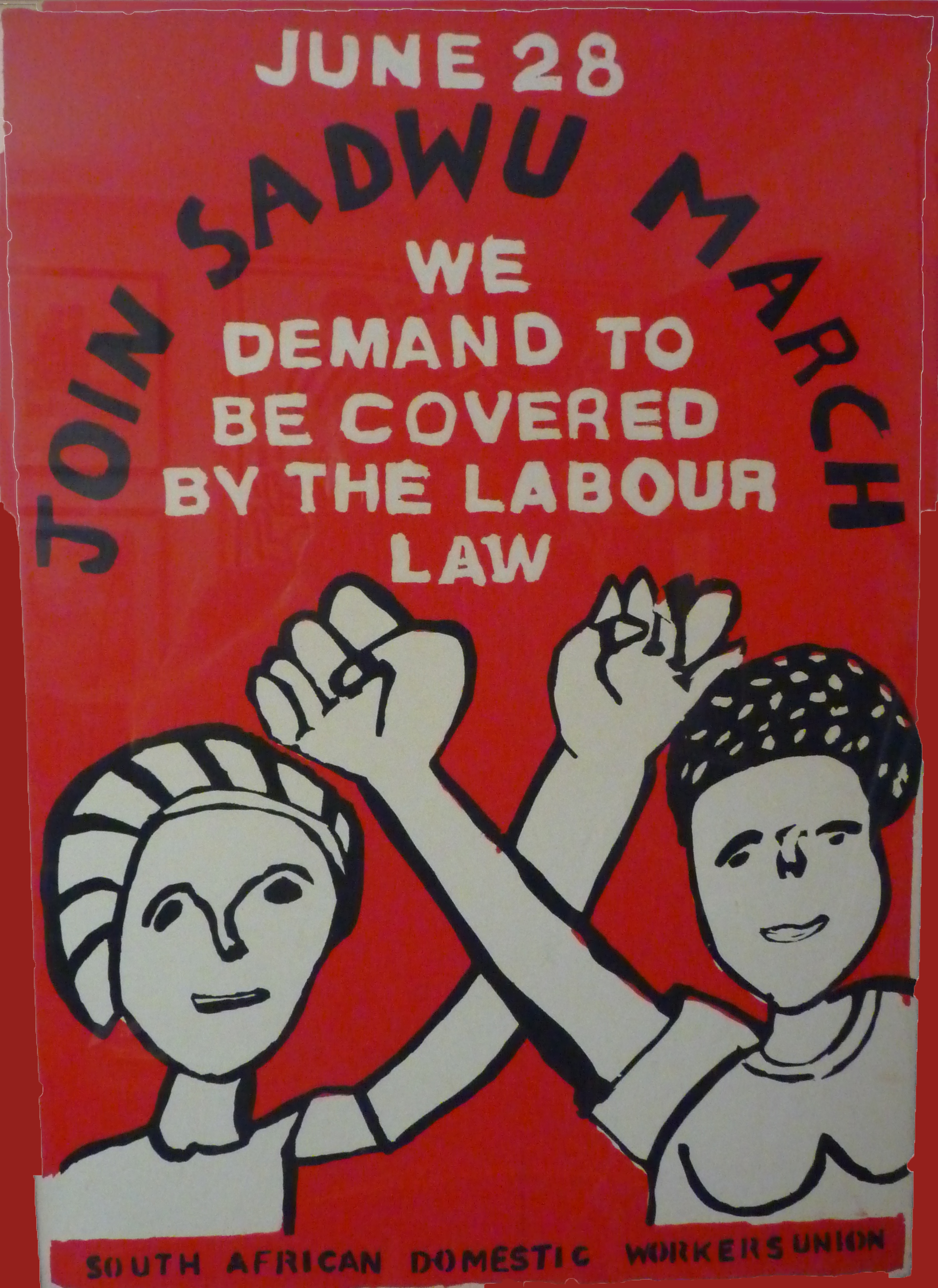 Take for instance, Robert Reich who says in his April 9th blog post, “Right-Wing Bullies Will Hold the Nation Hostage Again and Again.” Reich likens the political budget process to the theft of cupcakes and sandwiches by mean bullies who must be resisted or they’ll just keep stealing your sandwich. In Reich’s view, once resisted, they will no longer steal your sandwich. No, once resisted, they will employ more force to steal your sandwich.
What is the point of this silly schoolyard language? Is this the level at which things must be discussed?
Rather than speaking seriously, Reich sticks to the foolish idea that the Democratic President has let us down, has gone astray, and that the Congressional leadership is simply ‘weak’, for some reason refusing to expose the Republican lies. I would ask what to do about the Democratic lies, but it’s gotten to the point that they don’t even bother anymore with the façade of working-class empowerment.
Now I suppose that it would be totally unacceptable for a person like Reich to suggest that the parties act as two halves of a ruling coalition. A coalition which has as its purpose to manage and maintain the infrastructure of economic activity, not for the benefit of the citizenry, but for the benefit of the economy itself.
Instead we get this outmoded language of class warfare, as if the vastly complex and interconnected global economy were controlled by some small elite group of greedy Republicans who in a previous life were evil barons and barristers out of a Charles Dickens novel. This is just so simplistic and silly it more resembles a comic book than an adult analysis. Both parties, and the vast machinery of lobbyists, academics, think-tank analysts, and media purveyors who live off this crap all benefit from this false class-conflict storyline. It’s an easy story to tell, a manageable plotline that never goes astray or actually gets to the difficult reality of human life on Earth. A coherent and comprehensive new narrative is definitely called for, one that reflects the 21st century world that we inhabit. To my mind we live in a connected environment of physical nature, social structures, and technological structures that support the very real existence of an autonomous economy. The methodology of that autonomous economy is to steal my lunch.
Such a narrative does not seem to be coming from any quarter that I can find. Let me return, once again to Christopher Hedges and his call for a ‘culture of resistance.’ Perhaps one reason that Mr. Hedges seems to be so frequent a focus of my criticism is not because I am diametrically opposed to his position, but rather because I’m so close to his position, and he states it so well. Hedges and I both agree that there is no solution to our very real problems in the established parties, parties that blogger Lambert at Correntewire.com calls ‘legacy parties’. But still we get this old-style ‘non-passerant’ defensive resistance language. I would rather call for a ‘culture of demand’. Granted it takes both defense (resistance) and offense (demand) to conduct a campaign, but my stress would be on the offense. And using a different language than that of class.

There are some potentates that I would kill by any and all means at my disposal. The are Ignorance, Superstition and Bigotry. The most sinister and tyrannical rulers on Earth. ~Emma Goldman
Hedges will be a featured speaker at an April 15th demo at Bank of America offices in New York. In a statement by Kevin Zeese, a candidate for numerous public offices and an organizer of the event, Zeese says “The political process no longer works. … The economy is controlled by a handful of economic elites. … The only way to change this is to shift the power to a culture of resistance. This will be the first in a series of events we will organize to help give people control of their economic and political life.”
When did the political process ever work, in the democratic sense, if by process he means the process of voting? And if the economy is controlled by a handful of economic elites, well then name them. If there are so few and it’s that simple it should be easy to name names, right? And if by some measure one was able to eliminate that elite, then the problem would be solved, right? Equality achieved? Of course not, because it’s vastly more complicated than that.
Now we agree that a cultural shift is needed, away from a culture of compliance and fear. But a culture of resistance is always met by an opposing force. In Robert Reich’s view, the bully will stop at the first resistance. My guess is that Hedges and Zeese know better and are fine with that. I suggest however, and I think modern history shows that a culture of demand is more successful, given the real examples of Gandhi, King, Mandela (though this was a mixed approach of social demand and armed struggle) and our contemporary examples of Tunisia and Egypt. In those cases, it was the strategy of demand rather than the strategy of rebellion that prevailed (though there were glaring deficiencies in the demands themselves.)
And lastly, and certainly most troubling is the statement “This will be the first in a series of events we will organize to help give people control of their economic and political life.” I am greatly troubled by the ‘we will organize’ aspect of any proposed popular movement making such promises as those. As my ex-wife so poigntantly asked, “Who’s We, White Man?” It smacks of vanguardism and an unnatural desire to control the natural forces of real social movements. I am wary of politicians bearing gifts. But I look forward to the plan.
I myself will not propose a plan. I have no solutions to sell, but neither do I mean to attack others. If I were in New York on the 15th, I would probably be at BOA in support of the effort. But I believe that solutions will arise or they will not, organically, according to our collective choices and the forces of nature, and we shall survive or perish accordingly. I believe that there is no word for what will emerge out of the impending breakdown and chaos of the collapsing order.
At least I hope there isn’t. We need a completely new narrative.
Herbert and Hedges and how they are wrong.
In his final column for the New York Times, “Losing Our Way” Bob Herbert seemed rather spiritually depressed.
“The U.S. has not just misplaced its priorities. When the most powerful country ever to inhabit the earth finds it so easy to plunge into the horror of warfare but almost impossible to find adequate work for its people or to properly educate its young, it has lost its way entirely.” … “There is plenty of economic activity in the U.S., and plenty of wealth. But like greedy children, the folks at the top are seizing virtually all the marbles.”
Can’t say as I blame him, or don’t understand his sadness. And yet his disappointment is centered on unrealistic expectations of economic equality as if economic equality, a chimera, was the key to both happiness and virtue. Of course money has very little to do with either except perhaps in inverse proportion. This is not to make light or be dismissive of poverty. The right and entitlement of all creatures to sustenance, housing and in the case of humans, education and health care should be seen as natural rights, the gifts of god, if you will. (Luke 9:58 paraphrase “The foxes have holes and the birds of the air have nests, but the sons and daughters of mankind have nowhere to lay their heads.”)
Yet it is not the rich only who behave like greedy children. The rich are wealthy precisely because they have been able to ‘seize virtually all the marbles’. It’s the seizing that makes them rich. It is the seemingly genetic tendency to accumulate as much as possible for oneself. It is something that virtually everyone does to the best of their ability, and no one wants their government or their religion saying they can’t.
But this is not about a defense of the rich or an excuse for greed. If one is going to lament that America has lost its way, one should ask what the American Way is. Historically, the American Way is the well-traveled road of expropriation, resource exploitation, slavery, genocide and more recently, a cultural and military imperialism that denies its fundamentally violent character while extolling and employing devastating violence. There have been many notable voices opposed to this American Way, Mark Twain and Henry David Thoreau to name just two, but these are always individuals, exiled in the artistic gulag. I suppose we could mention the Amish and the Shakers, but those are isolated religious sects. No, if we are going to avoid the depression of false and unrealistic expectations, then we must accept that the American Way to the American Dream is thoroughly avaricious and rapacious.
I have some sympathy for Mr. Herbert. It’s hard to leave what you’ve done for a long time, hard to leave a position that by its very nature defines what you believe and to some extent, who you are.
I have no such sympathy for Christopher Hedges, who in his most recent and most ridiculous commentary for Truthdig “The Collapse of Globalization” makes the silly assertion that unrest in the Middle East, Brittan, Greece, Ireland and Wisconsin presages the collapse of globalization.
He then continues:
“We must embrace, and embrace rapidly, a radical new ethic of simplicity and rigorous protection of our ecosystem—especially the climate—or we will all be holding on to life by our fingertips. We must rebuild radical socialist movements that demand that the resources of the state and the nation provide for the welfare of all citizens and the heavy hand of state power be employed to prohibit the plunder by the corporate power elite.” C. Hedges
Well of course we must embrace a radical new [sic] ethic of simplicity and rigorous protection of our ecosystem. But does anyone in their right mind believe that radical socialist movements employing the heavy hand of the state will either protect our environment or prohibit plunder by elites? Socialism is about carrying on the same kind of industrialism and economic expansionism that capitalism requires while simply slicing off enough of the economic growth to provide better social services to its working-class. Not that I object to that, I’m all in favor of proper social services, of course. But socialism does not have the answer to the fundamental problems of industrial production and technological advancement. Socialism does not put an end to economic disparity, it just mitigates it. More importantly, Socialism has no answer to industrialism or to technology. It is industrial production that is killing the planet and it is technology that relentlessly decreases the value of labor. Socialism is a better (much better) political system than unregulated capitalism, but it can’t solve the critical problems of the 21st century.
No, rather than signaling the end of globalism, what we’re seeing in the current unrest is the positive effects of globalism. Not the falsely labeled and limited globalism of ‘free-trade’ economists that Hedges cites, but the unintended consequences of globalism. The communication technology (developed by the U.S. military and deployed worldwide by corporations) is being used to globalize popular information, and that information is being used to collapse false nation-states. The despotic and artificial ones are collapsing first, naturally. But even the well-established order of nations in Europe and the U.S. is being undermined by the same information technology. It is a process that the composer John Cage mirthfully described as “governments being embarrassed out of existence.” The nation-state is becoming increasingly inefficient and detrimental to both the global economy and to local survival. Its previous role in forging a common identity is being supplanted by cultural identities not bound by national borders (positive), or in a throwback to the so-called ‘middle ages’ fundamentalist religious identities (negative). Unable to regulate forces more powerful than themselves, the nation-states only remaining function, that of the police state, is rapidly decreasing in value to global economic entities, as it is impossible to maintain a positive public image while massacring local populations as the rest of the world is watching.
We are witnessing what happens when people have the ability to actually think globally and act locally. The problem for Hedges is that he’s a writer, a professional writer, and writers must write about what they know or they don’t make a living. The words and political ideologies of the 19th and 20th centuries will not apply to the 21st. There is no word for what comes next, and pretending to know what it is is just that, pretense.
Fighting the Last War – a Response to Chris Hedges
A response to Chris Hedges’ “Tolerating the Intolerant“.
 I like the work Chris Hedges does. I do. Naomi Klein too. But it seems to me that to apply a 19th century model – Marxist class struggle – to the 21st century reality doesn’t work.
Just for starters, it assumes that the economy still works as it did 200 years ago. It doesn’t. The economy is global, electronic, instantaneous, and autonomous, meaning it operates as an integrated system not controlled by a wealthy elite class of human beings, but as a complex system designed to exploit economic opportunities in ways no single human or small group of humans can control. To couch it in popular culture, Skynet employs banks, not bombs in its war against humanity.
 We could go on for a very long time on this idea, but briefly, I don’t think it’s useful to invoke and advocate class warfare. Our society simply doesn’t look at all like the society of 19th century England in which Marx lived. Everyone in every class acts to enrich themselves. That is the inevitable product of a society based on accumulation.
It is easy, and natural, to attack other groups of people, whether for race, religion or income. It is not so easy to identify and address the actual source of the very real crisis we face as a species and as the dominant players on the planet. In my mind, it is the basic economic process of accumulation that has been at the heart of human society since the adoption of agriculture that is the problem.
 We will not return to hunter-gatherer communalism, nor tribalism, nor feudalism. Rampaging industrial capitalism is clearly killing us and the planet. Democratic socialism was a good transitional system and has bought us some time, but it is clearly fighting the inherent flaw in being based on the nation-state structure. [Does anyone really believe that any of the social-democratic nations are actually in control of their economies?]
The adaptation for survival, should we chose to adopt it, will not be designed from old ideas and ideologies but will emerge as a natural evolution from the actual existential environment into something that doesn’t yet exist and has never existed before. If we succeed, there is as yet no word for what comes next. If we fail, the word is extinction.
[All graphics by Rockwell Kent]




 Pax Lupo
No More Stalins, No More Hitlers
Prophesy of William Burroughs c. 1989.
Share this: